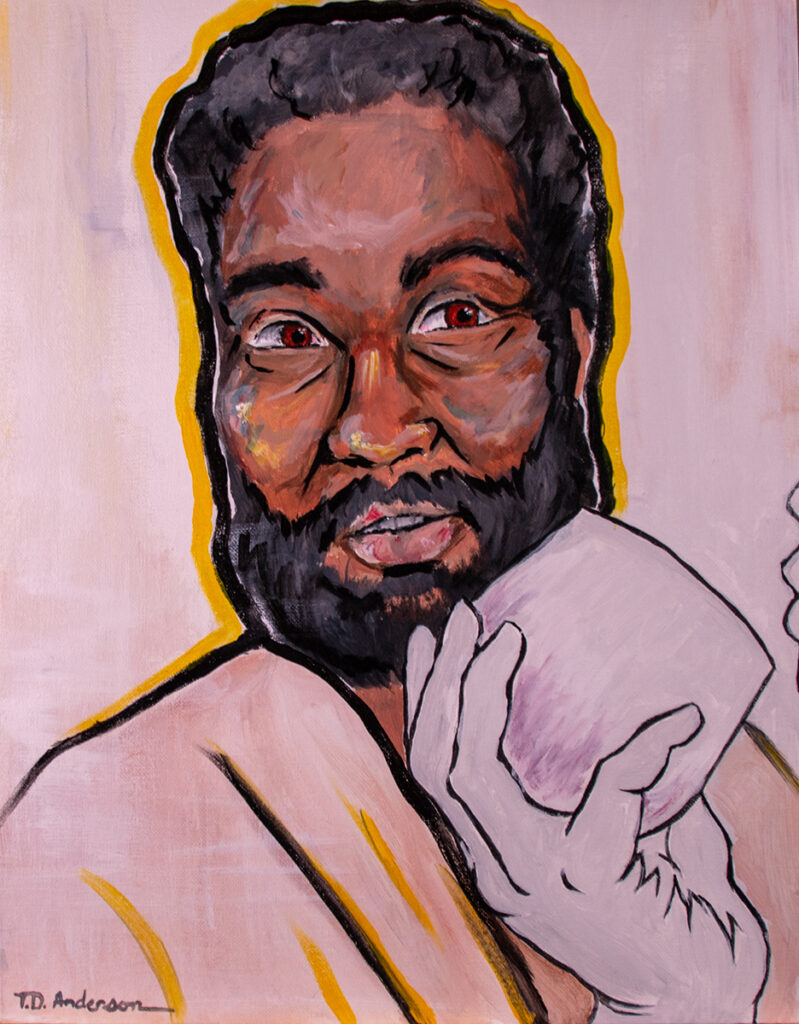
Sermons on Luke
The Changemakers: Collaboration
Jesus didn’t do this work alone, and you can’t, either. The key thing Jesus did when starting ministry was to gather a group of people, a team of disciples. He didn’t do it alone but in collaboration. Partnerships and joining others are essential parts of changemaking. Like the African proverb: “If you want to go fast, do it alone. If you want to go far, do it together.” Worship online with thetable.live. CCLI #805699 / CCLI Streaming #094804
The Changemakers: Compassion
Changemaking starts with compassion. Jesus tells his disciples, “Take a look.” As people of faith who want to make a difference, we must start with compassion: with connection, with seeing and “suffering with.” The source of this deep compassion, and the source of strength to be a part of the change, is God’s love. Worship online with thetable.live. CCLI #805699 / CCLI Streaming #094804
Steadfast Practice
Both spiritual practice and steadfast activism require a pattern of faithful presence over time (often with no visible result). Showing up, again and again, is the shape of both spiritual practice and activism. Worship online with thetable.live. CCLI #805699 / CCLI Streaming #094804
Free and be Freed
The Christian gospel is a liberation announcement — and being set free demands a response. If life in Christ is a life set free, what kind of world is that life called to help build? Worship online with thetable.live. CCLI #805699 / CCLI Streaming #094804

Revealed Through Nonviolence
Lent was originally a season for new converts to learn and prepare for their baptism on Easter. During that time, they would study what was central to Christianity. As we enter this new series, we study what is central to Jesus’ life and ministry: radical welcome, love for neighbor, care for the vulnerable, nourishment for the hungry, nonviolence in the face of injustice. At the heart of Jesus’ teachings, we find liberation, love, mercy, and grace—all of which are meant…

The Good News is… All Are Invited
Ash Wednesday at The Table. Worship online with thetable.live. CCLI #805699 / CCLI Streaming #094804

GOOD NEWS IS LOUDER THAN FEAR 11:00pm
Luke 2:13-20
GOOD NEWS IS LOUDER THAN FEAR 5:00pm
Luke 2:7-20, (NRSV)

EVEN IN OUR FEAR, WE ARE CALLED FORWARD
Luke 1:26-39 (NRSV) When the angel Gabriel breaks into Mary’s life, she responds with confusion, resistance, and fear – and with good reason! The text says that she is “greatly troubled!” And yet, Mary steps forward anyway, “Here am I, the servant of the Lord; let it be with me according to your word.” But notice, Mary’s yes is not immediate and not naïve, it is rooted in her vulnerability, trust, and even survival. The Rev. Dr. Boyung Lee describes…

INSISTING ON HOPE THIS ADVENT
Luke 1:5-13, Lamentations 3:55-57 (NRSV) “In the time of Herod …” places Jesus’ birth in a world shaped by political unrest, societal uncertainty, violence and fear. In this context, Luke introduces us to Elizabeth and Zechariah – an aging childless, priestly couple whose life is centered on a deep longing and faithful waiting. This intense longing and waiting creates a particular kind of fear. Although it invokes an “inner shaking, a disruption of body and spirit,” it is not a failure.…
DEEP COMMITMENTS: DISCERNMENT
Luke 9:28-36 As we discovered last week, John Wesley believes that reason provides knowledge which informs our understanding of God and life, but reason alone cannot explain everything – thus the need for a faith and “spiritual” experience of God that continually transforms our lives into an expression and embodiment of the love of God, other(s), and self. In other words, although our faith and experience of God will express realities that are beyond the intellectual bounds of reason, our…
DEEP COMMITMENTS: REFLECTION
Luke 2:41-47 John Wesley, the founder of the 18th Methodist movement and what became the worldwide Wesleyan tradition, was an advocate for theological reflection and education for all people (regardless of their social status). Embracing the intellectual component of our humanity, he believed that “reading Christians are growing Christians. When Christians cease to read, they cease to grow.” Consequently, he believed that reason (along with experience, scripture, and tradition) is one of the fundamental sources we draw upon in order…